
People who search for the “Buffalo State Fair” are often looking for information about the Erie County Fair in Hamburg, New York. The 2026 fair runs from August 12 through August 23. Heavy traffic, crowded parking areas, and increased police activity near the fairgrounds can lead to speeding tickets, unsafe lane allegations, open-container charges, aggravated unlicensed operation charges, or a DWI investigation.
New York recognizes alcohol-related DWAI, per se DWI, common-law DWI, aggravated DWI, drug-impaired driving, and combined alcohol-and-drug impairment. An alleged refusal of a post-arrest chemical test can also create a separate DMV case with its own deadlines and license consequences.
If you were stopped after visiting the fair, save every ticket, appearance notice, release paper, refusal notice, and property receipt. Write down what happened while the details remain fresh. Preserve receipts, parking records, location information, photographs, and witness names. Avoid posting facts about the stop or arrest online.
Arthur L. Pressman, Attorney at Law represents people facing DWI and traffic charges in Buffalo, Hamburg, Erie County, Western New York, and nearby areas.
Arthur Pressman focuses in the areas of DWI, traffic law and criminal defense.



Traffic Conditions Near the Erie County Fairgrounds 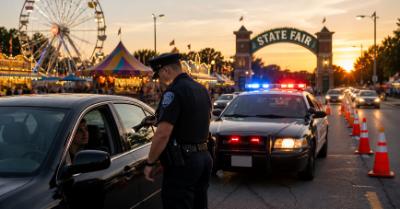
The Erie County Fair is held at the Hamburg Fairgrounds south of Buffalo. Traffic near McKinley Parkway, South Park Avenue, Route 20, Route 219, and surrounding local roads can involve slow lanes, sudden stops, pedestrian activity, changing traffic directions, and crowded parking entrances.
A stop may begin with a traffic allegation and expand when an officer reports an odor of alcohol or cannabis, an open container, signs of impairment, or a suspended driving privilege. The fact that a stop began near the fair does not determine whether the charge is valid. The facts, officer observations, recordings, test procedures, and paperwork still matter.
Common Traffic Charges Near the Fairgrounds
One traffic stop can produce several tickets. Common allegations may include:
- Speeding
- Following too closely
- Unsafe lane change
- Failure to signal
- Failure to yield
- Cell phone or portable electronic device use
- Improper passing
- Reckless driving
- Driving with a suspended or revoked license
- Open-container violations
New York assigns points after a conviction for many moving violations. For conduct beginning February 16, 2026, the current point schedule includes:
- 5 points for reckless driving
- 5 points for cell phone or portable electronic device use
- 4 points for following too closely
- 3 points for an unsafe lane change
- 3 to 11 points for speeding, depending on the alleged speed
- 11 points for aggravated unlicensed operation
- 11 points for an alcohol- or drug-related conviction or administrative incident
A New York driver license may be suspended when a driver reaches 11 points within a 24-month period. Points are generally added after a traffic conviction, and the total is calculated from the violation dates. Alcohol, drug, and aggravated unlicensed operation matters may also involve separate administrative rules.
Learn more about traffic-ticket defense at:
https://www.arthurpressmanlaw.com/criminal-defense/traffic-tickets/
I was advised by a mutual acquaintance to contact Mr. Pressman following my DWI that I received on December 28, 2015. This was the best advice that I could have been given. He was available immediately to speak with. I was put at ease after speaking with him. It was my first DWI and I had no idea what to expect. It was an isolated case of making a very foolish decision to drive. I had so much anxiety and fear of the unknown. Throughout my whole case Mr. Pressman was very reassuring and kept a positive attitude about what my outcome was going to be. He was available several times when I had random questions and never made me feel like an inconvenience. He was right! My case ended up being reduced to a violation from a misdemeanor and now I can finally begin to have my life back to normal. It was a hard lesson to learn but with the right attorney by your side the transition will be easier. Anita D.
When a Traffic Stop Becomes a DWI Investigation
An officer needs a lawful basis for a traffic stop or another legally recognized basis for the encounter. After contact begins, the officer may report observations involving driving behavior, an odor of alcohol or cannabis, visible containers, statements about drinking or drug use, bloodshot eyes, speech, balance, coordination, or performance on roadside exercises.
Those observations are not automatically conclusive. Fatigue, medical conditions, anxiety, uneven pavement, footwear, weather, lighting, traffic noise, and roadside conditions may affect what an officer sees or hears.
New York Vehicle and Traffic Law Section 1192 applies on public highways, private roads open to motor vehicle traffic, and qualifying parking lots. A DWI allegation can therefore arise in or near a fair parking area even when the vehicle did not travel far.
Read more about New York DWI defense at:
https://www.arthurpressmanlaw.com/criminal-defense/dwi/
DWAI, DWI, and Aggravated DWI Charges
The charge may depend on the alleged blood alcohol concentration, officer observations, chemical-test evidence, suspected drug use, prior history, passenger age, and other circumstances.
Choosing a DWI Lawyer Cost of a DWI Attorney Our Buffalo DWI lawyer explains DWI, DWAI, aggravated DWI, and the possible penalties. A Buffalo DWI lawyer can review the court and DMV issues in your case. Read about hardship-license eligibility and underage drinking penalties. Speak with a Buffalo DWI lawyer about the stop, testing, and available defenses. Call (716) 517-4250 for a free consultation.Related Videos
Understand the charge
Protect your ability to drive
Discuss your next step
Driving While Ability Impaired by Alcohol
Alcohol-related DWAI is based on alleged impairment. A blood alcohol concentration above .05 but below .07 may be considered with other evidence, but DWAI is not defined by a single per se threshold.
A first alcohol-related DWAI is a traffic infraction. Statutory penalties include a fine of $300 to $500, up to 15 days in jail, and a 90-day license suspension. Other assessments and consequences may also apply.
Driving While Intoxicated
Per se DWI may be charged when a chemical test allegedly shows a blood alcohol concentration of .08 or higher. New York also recognizes common-law DWI based on alleged intoxication, even when the prosecution does not rely only on a numerical test result.
A first DWI is generally a misdemeanor. Statutory penalties include a fine of $500 to $1,000, up to one year in jail, and license revocation for at least six months.
Case Results
Aggravated DWI
Aggravated DWI may be charged when a chemical test allegedly shows a blood alcohol concentration of .18 or higher. A first aggravated DWI offense can carry a fine of $1,000 to $2,500, up to one year in jail, and license revocation for at least one year.
Drug, Combination, and Child-Passenger Charges
New York prohibits driving while ability is impaired by a drug and driving while ability is impaired by the combined influence of drugs or alcohol and drugs. These cases may involve prescription medication, cannabis, controlled substances, or more than one substance.
The prosecution must still prove every required element beyond a reasonable doubt. The defense may examine operation, impairment evidence, officer training, toxicology, collection procedures, laboratory records, medical explanations, and the connection between a detected substance and the alleged impairment.
A DWI or aggravated DWI conviction can require an ignition interlock device. When a child who is 15 years old or younger is a passenger, New York law permits an aggravated DWI with a child charge, which is a felony offense.
Open Container and Cannabis Allegations
New York Vehicle and Traffic Law Section 1227 generally prohibits drinking alcohol, consuming cannabis, or possessing an open alcohol container in a motor vehicle located on a public highway or highway right-of-way, subject to statutory exceptions.
An open container does not by itself prove intoxication. Questions may include:
- Who possessed the container
- Where the container was located
- Whether it was open
- Whether the vehicle was on a covered roadway
- Whether a statutory exception applies
- Whether the officer lawfully expanded the investigation
Chemical Test Refusal and DMV Consequences
An alleged refusal of a post-arrest chemical test can create a DMV proceeding that is separate from the criminal case. A first refusal can result in a $500 civil penalty and license revocation for at least one year.
A refusal hearing commonly addresses whether the officer had reasonable grounds, whether the arrest was lawful, whether the required refusal warnings were given, and whether the driver actually refused after receiving those warnings.
Roadside screening and post-arrest chemical testing are not always treated the same way. The exact test requested, the timing, the warnings, the response, and the paperwork should be reviewed closely.
Protect Your License Deadlines
Save every refusal notice and DMV document. A missed hearing or response deadline can affect your ability to challenge the administrative case, even while the criminal charge remains pending.
Reckless Driving and Aggravated Unlicensed Operation
Reckless driving under Vehicle and Traffic Law Section 1212 is a misdemeanor. The statute covers driving that unreasonably interferes with the free and proper use of a public highway or parking lot, or that unreasonably endangers people using those areas.
Speed alone does not establish every reckless-driving case. A charge may be based on the total circumstances, including speed, weaving, passing, traffic density, pedestrians, road design, visibility, and distance from other vehicles.
Learn more about reckless-driving cases at:
https://www.arthurpressmanlaw.com/criminal-defense/reckless-driving/
Aggravated unlicensed operation may be charged when a person operates a motor vehicle on a public highway while knowing or having reason to know that the person’s license or New York driving privilege is suspended or revoked. The degree of the charge can depend on prior history, the basis for the suspension, the number of suspensions, and other facts.
Some drivers first learn about an unresolved suspension during the stop. Notice records, mailing information, prior tickets, payment history, and reinstatement efforts may affect the case.
Learn more about suspended-license cases at:
https://www.arthurpressmanlaw.com/criminal-defense/suspended-license/
Evidence to Preserve After a Fair-Related Stop
Evidence can disappear quickly. Preserve any material that may help explain the timeline, location, vehicle operation, officer observations, or testing process.
Useful evidence may include:
- Tickets, appearance notices, refusal paperwork, and release documents
- Dash-camera, passenger, or nearby video
- Fair admission, parking, food, and beverage receipts
- Rideshare records and phone location history
- Photographs of signs, lighting, pavement, and parking-lot layout
- Names and contact information for passengers or witnesses
- Medical records and prescription information
- Tow, impound, and vehicle-release records
- Police video, dispatch records, calibration records, and testing records requested through counsel
Write a private timeline. Include when you arrived, what you ate or drank, where the vehicle was parked, who drove, when police made contact, what the officer said, what tests were requested, and what documents you received.
Do not alter evidence. Do not contact witnesses to influence what they say. Do not post the facts of the case on social media.
Which Court May Handle the Case
The court depends on the exact location of the stop or alleged offense. A case near the fairgrounds may be assigned to a Hamburg court or another local court. A stop closer to Buffalo may be handled in a different jurisdiction.
The ticket, appearance notice, arraignment paperwork, or release documents should identify the court and the required date. Do not assume that a Buffalo mailing address means the case will be heard in Buffalo City Court.
Review the firm’s Hamburg court information at:
https://www.arthurpressmanlaw.com/hamburg-dwi-and-traffic-court-attorney/
Speak With a Buffalo DWI and Traffic Attorney
A fair-related DWI arrest or traffic charge can affect your driving privileges, employment, insurance, travel, and record. Review the evidence and possible consequences before deciding how to respond.
Arthur L. Pressman brings more than 35 years of experience to DWI, traffic, and criminal defense matters across Buffalo, Hamburg, Erie County, Western New York, and nearby areas. The firm can review the stop, tickets, testing records, court papers, and DMV issues, then explain the options that apply to your circumstances.
Call (716) 517-4250 or request a case evaluation at:
https://www.arthurpressmanlaw.com/contact-us/
This article is for informational purposes only and is not legal advice. Consult an attorney about your specific circumstances.