
Yes. A Halloween prank can lead to criminal charges in New York if it includes property damage, unlawful entry, threatening conduct, injury, or a public disturbance that satisfies a criminal statute. Possible charges include criminal mischief, trespass, menacing, assault, and disorderly conduct. The charge depends on what happened, the evidence, and the legal requirements of the offense. If you face allegations in Buffalo or nearby Western New York communities, a criminal defense attorney can help you understand your options.
When Does a Halloween Prank Become a Crime in New York?
A costume, surprise, or ordinary trick-or-treating activity is not automatically a crime. Conduct can cross a legal boundary when you intentionally damage property, knowingly enter a place without permission, threaten another person, or cause a legally significant public disturbance.
Halloween activities that could prompt an investigation include:
- Throwing eggs or objects that damage houses or vehicles.
- Breaking decorations, mailboxes, fences, or windows.
- Entering restricted property or refusing to leave after authorization ends.
- Chasing or physically threatening a stranger.
- Blocking public traffic or creating dangerous conditions.
- Taking another person’s decorations or belongings.
Calling an incident a joke does not resolve whether the prosecution can prove the elements of a charge. Intent, injuries, property damage, and the surrounding circumstances matter.
Arthur Pressman focuses in the areas of DWI, traffic law and criminal defense.



Can Egging a House or Car Lead to Criminal Mischief Charges?
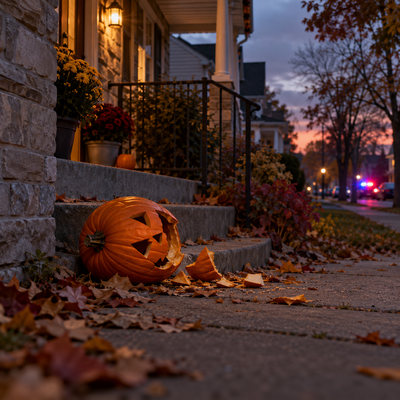
Yes, if an egging incident damages someone else’s property and the required state of mind can be established. Under New York Penal Law § 145.00, fourth-degree criminal mischief includes intentionally damaging another person’s property without a legal right or reasonable belief in that right. It is a Class A misdemeanor.
Fourth-degree criminal mischief also covers specified other conduct, including reckless property damage exceeding $250 in the circumstances described by the statute. Under § 145.05, intentionally damaging another person’s property in an amount exceeding $250 can constitute third-degree criminal mischief, a Class E felony.
- Eggs that damage vehicle paint may support a property-damage allegation.
- Smashing another person’s pumpkins or outdoor lighting may support a charge.
- A failed prank that causes no damage requires a different legal analysis from one that damages property.
Photographs, estimates, repair records, witness statements, and proof of intent can affect how prosecutors evaluate the allegation.
Official statute: New York criminal mischief statute
Third-degree criminal mischief: Third-degree criminal mischief statute
Can Halloween Trespassing Result in Criminal Charges?
New York Penal Law § 140.05 makes it a trespass violation to knowingly enter or remain unlawfully on premises. Ordinary access to a walkway for trick-or-treating does not automatically meet that definition. A posted restriction, a request to leave, or entry into a closed area can change the analysis.
For example, entering a neighbor’s garage to hide during a prank may lead to a trespass investigation even when you intend to leave quickly. More serious criminal trespass offenses involve additional statutory requirements, such as the type of property or building involved.
New York trespass statute: New York trespass statute
Can Scaring Someone on Halloween Be Menacing?
A frightening mask alone is not menacing. Under Penal Law § 120.15, third-degree menacing involves intentionally placing or attempting to place another person in fear of death, imminent serious physical injury, or physical injury through physical menace. It is a Class B misdemeanor.
Someone chasing a stranger and making aggressive physical movements could face an investigation, depending on the conduct, intent, and evidence. Greater charges can apply when the circumstances satisfy additional elements of another menacing offense.
New York menacing statute: New York menacing statute
Related Videos
Criminal Mischief in the First Degree
Felonies versus Misdemeanors
Related defense guides
Read how assault charges can affect employment in New York and learn about underage drinking penalties and the issues families should discuss with defense counsel.
What Happens if a Halloween Prank Causes an Injury?
A physical prank may result in an assault charge if the required physical injury and mental state are present. Penal Law § 120.00 includes intentionally causing physical injury and recklessly causing physical injury, along with another statutory form involving criminal negligence and a qualifying weapon or dangerous instrument. Third-degree assault is a Class A misdemeanor.
For example, pushing someone who then falls and suffers a qualifying injury may lead to an assault investigation. An accidental fall, without the elements of a particular offense, does not automatically establish criminal assault. More serious injuries or aggravating circumstances can result in more serious charges.
New York assault statute: New York assault statute
Could a Halloween Prank Lead to Disorderly Conduct Charges?
Under Penal Law § 240.20, disorderly conduct covers specified public behavior carried out with intent to cause public inconvenience, annoyance, or alarm, or while recklessly creating a risk of such consequences. It is a violation, not a misdemeanor or felony.
- Fighting or threatening behavior in a public setting.
- Unreasonable noise under the statutory circumstances.
- Obstructing pedestrian or vehicle traffic.
- Creating a hazardous or physically offensive condition without a legitimate purpose.
A noisy Halloween gathering does not necessarily establish disorderly conduct. The public impact, conduct, and mental state must fit the law.
New York disorderly conduct statute: New York disorderly conduct statute
What Penalties Can Follow Halloween-Related Charges?
Potential penalties vary by offense, criminal history, and sentencing circumstances. Examples of statutory maximum jail terms include:
- Disorderly conduct (violation): up to 15 days.
- Third-degree menacing (Class B misdemeanor): up to three months.
- Fourth-degree criminal mischief or third-degree assault (Class A misdemeanor): up to 364 days.
- Third-degree criminal mischief (Class E felony): felony sentencing rules apply, and a state prison term may be possible.
Other possible consequences include fines, restitution, conditional discharge, and probation where authorized. The possible effect on employment, education, or licensing depends on the charge and case outcome. These are maximums or general categories, not predictions of an individual sentence.
Key takeaway: A prank involving property damage or physical threats can expose you to criminal allegations even if you did not intend the incident to be taken seriously.
Case Results
Can Teenagers Face Criminal Consequences for Halloween Pranks?
Yes. A teenager’s age, the alleged offense, and applicable New York juvenile laws determine how a matter is handled. Some cases proceed in Family Court, while certain adolescent cases are handled initially in Youth Part. Youthful offender treatment may also be relevant for eligible individuals in criminal court, subject to the legal requirements.
Families should take allegations of property damage, theft, threats, or injury seriously and obtain advice about the specific procedure that applies. A minor’s case is not necessarily resolved with an informal warning.
What Should You Do if Police Question You About a Halloween Prank?
If police contact you about a Halloween incident, remain calm and avoid interfering with an investigation. You can take steps to protect your rights and preserve evidence:
- Ask whether you are free to leave if the circumstances are unclear.
- Exercise your right to remain silent when appropriate and request an attorney before investigative questioning.
- Preserve messages, photos, videos, and other relevant records.
- Avoid contacting witnesses or alleged victims to influence their accounts.
- Comply with lawful court notices and attend required appearances.
- Do not delete evidence or encourage anyone to change a statement.
A criminal defense lawyer can assess statements, camera footage, damage estimates, identification evidence, and police procedures. Individual circumstances can change the appropriate approach.
Can Halloween Criminal Charges Be Reduced or Dismissed?
Depending on the evidence and applicable rules, an attorney may challenge the allegations, seek a reduction, or request dismissal. Possible issues include whether property was damaged, whether the required intent existed, whether witnesses identified the accused accurately, and whether police obtained evidence lawfully.
A first arrest does not ensure a particular outcome. Charge reductions, dismissals, and diversion options depend on the offense, the prosecutor, the court, and the person’s eligibility.

Arthur Pressman is who you want representing you in court. My son was pulled over and charged with 3 felonies and several misdemeanors. It was a terrible time, with my son arrested and taken to the holding center. I contacted Mr. Pressman, and it wasn’t long before the felonies were dropped as were some of the misdemeanors. My son is now getting the help he needs. Mr. Pressman is highly respected in the court system. I am very thankful for what he was able to do. We felt like we were living a nightmare but things turned around and got better because of him. He is very professional but also a genuine nice person . I highly recommend him.
J.N.O.
Speak With a Buffalo Criminal Defense Attorney About Halloween-Related Charges
If you or a family member faces Halloween-related allegations in Buffalo, Williamsville, Amherst, Cheektowaga, or nearby Western New York communities, Arthur L. Pressman, Attorney at Law, can review the circumstances and explain potential defense options. The firm handles criminal defense matters in the Buffalo area and offers consultations.
Buffalo criminal defense information: Buffalo criminal defense information
This article provides general information about New York law and is not legal advice. Legal outcomes depend on the facts and law applicable to each case.

|
|