
A DWI after a Buffalo summer concert can affect your license, your record, your work, and your ability to move forward with confidence. Arthur L. Pressman, Attorney at Law, helps people facing DWI charges in Buffalo, Erie County, and Western New York understand the court process, protect their rights, and respond quickly after an arrest. In New York, a driver can face DWI allegations based on a BAC of 0.08 percent or higher, other evidence of intoxication, drug impairment, or a combination of alcohol and drugs. A refusal to submit to a chemical test can also create separate DMV consequences, including license revocation, even before the criminal case is resolved.
Arthur Pressman focuses in the areas of DWI, traffic law and criminal defense.


What to Do If You Get a DWI After a Buffalo Summer Concert 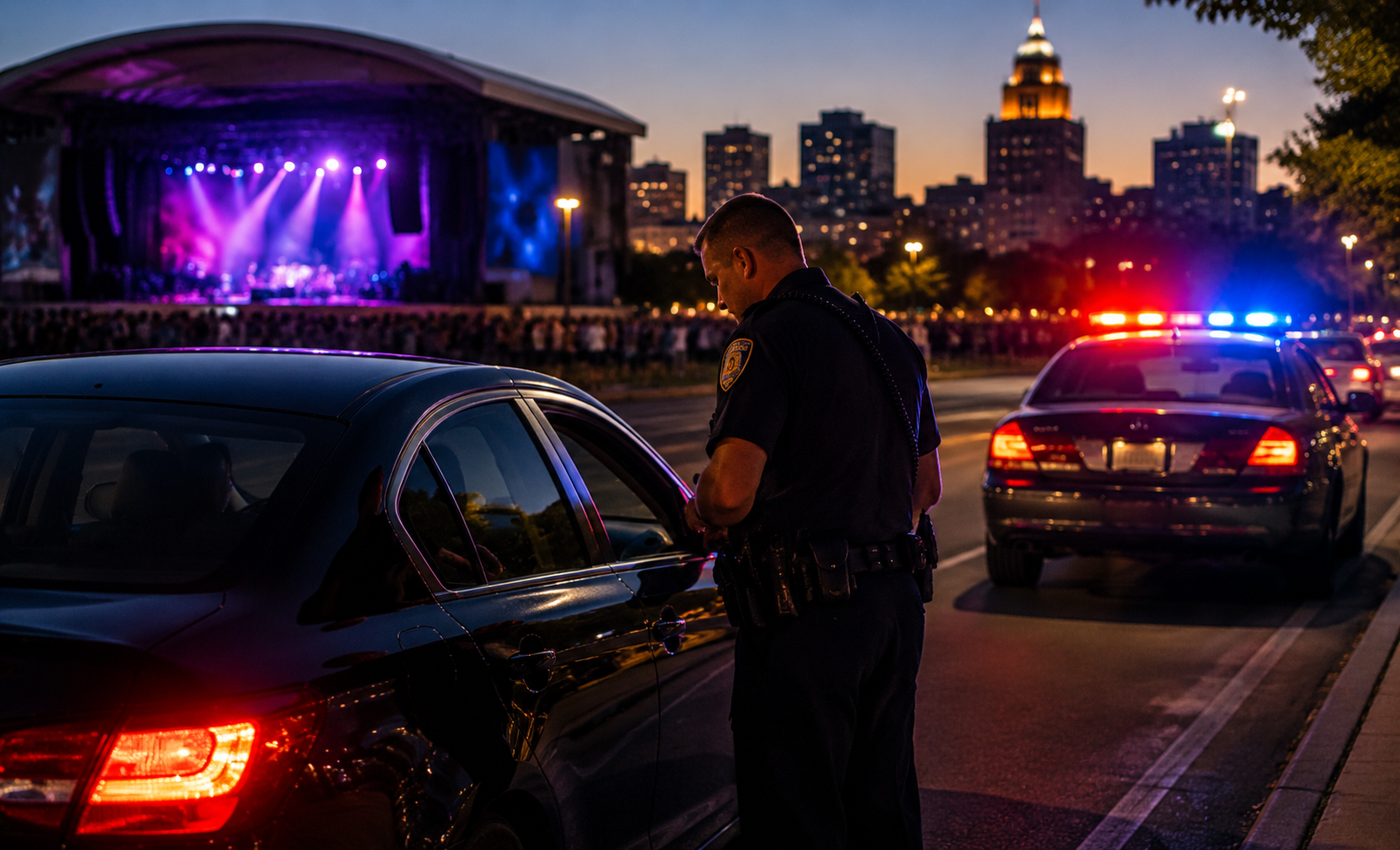
Buffalo summers bring packed concert calendars, outdoor events, waterfront crowds, late dinners, and long drives home through downtown Buffalo, Williamsville, Amherst, Cheektowaga, and nearby areas. A fun evening can change quickly if flashing lights appear behind your vehicle after leaving a concert, festival, or summer event. If an officer suspects impaired driving, your words, your conduct, and your next decisions may affect your case from the first minute of the stop.
A DWI arrest does not mean you have no options. It also does not mean every piece of evidence against you is reliable or legally usable. Police must have a lawful basis for the stop, proper grounds for the arrest, and legally acceptable procedures for testing and questioning. The sooner you understand what happened and speak with a lawyer, the easier it may be to preserve details that can matter later.
What Happens During a DWI Stop After a Concert
A DWI stop after a summer concert often begins with an officer observing something on the road. The officer may claim that you were speeding, drifting within your lane, making a wide turn, failing to signal, driving without headlights, or committing another traffic violation. In busy concert traffic, officers may also be watching areas near parking lots, exit roads, hotel corridors, restaurant districts, and major routes such as I-190, Route 5, the Kensington Expressway, and streets around downtown Buffalo.
Once the officer approaches your vehicle, the investigation usually shifts from the driving pattern to your appearance, speech, coordination, and behavior. The officer may ask where you are coming from, whether you drank alcohol, how much you consumed, when you last had a drink, and where you are headed. You should be respectful, but you do not need to guess, explain, or give detailed statements that may later be used against you. Provide your license, registration, and insurance information, then keep your answers limited and calm.
I was advised by a mutual acquaintance to contact Mr. Pressman following my DWI that I received on December 28, 2015. This was the best advice that I could have been given. He was available immediately to speak with. I was put at ease after speaking with him. It was my first DWI and I had no idea what to expect. It was an isolated case of making a very foolish decision to drive. I had so much anxiety and fear of the unknown. Throughout my whole case Mr. Pressman was very reassuring and kept a positive attitude about what my outcome was going to be. He was available several times when I had random questions and never made me feel like an inconvenience. He was right! My case ended up being reduced to a violation from a misdemeanor and now I can finally begin to have my life back to normal. It was a hard lesson to learn but with the right attorney by your side the transition will be easier. Anita D.
Field Sobriety Tests After a Buffalo DWI Stop
Many DWI investigations include field sobriety tests. These may involve walking a straight line, standing on one leg, following an object with your eyes, or performing other coordination tasks. These tests can be affected by more than alcohol. Fatigue after a long concert, uneven pavement, bright lights, footwear, medical conditions, nerves, noise, and weather can all influence performance.
Field sobriety tests are often presented in court as evidence of impairment, but they are not perfect. A defense lawyer may review whether the officer gave proper instructions, whether the testing surface was appropriate, whether the officer interpreted the results fairly, and whether body camera or dash camera footage supports the police report. If the test conditions were poor, the results may be less persuasive than they appear at first.
Chemical Testing and New York DWI Law
New York DWI cases often involve a breath, blood, or urine test. The New York DMV identifies DWI as involving a BAC of 0.08 percent or higher, or other evidence of intoxication. Aggravated DWI may involve a BAC of 0.18 percent or higher, while DWAI by alcohol may involve a BAC of more than 0.05 percent but less than 0.07 percent, or other evidence of impairment.
A chemical test result may seem intimidating, but it still needs careful review. Breath testing devices must be maintained and operated properly. Testing must follow required procedures. The timing of the test may matter because alcohol absorption and elimination can change BAC levels over time. A person who had drinks earlier in the evening may have a different BAC at the time of driving than at the time of testing. These issues are technical, but they can become central to the defense.
Choosing a DWI Lawyer Cost of a DWI AttorneyRelated Videos
Refusing a Breath or Chemical Test
Some drivers believe refusing a test will automatically help their case. In New York, refusal can create serious DMV penalties. The DMV states that refusing a chemical test after a DWI or related arrest can result in license revocation for at least one year and a civil penalty, even if the person is not later convicted of DWI or DWAI.
This does not mean every refusal case is simple for the prosecution. The warning given by the officer, the timing of the request, the clarity of the instructions, and the circumstances surrounding the alleged refusal may all matter. If you were confused, requested a lawyer, had difficulty understanding the officer, or were not properly advised of the consequences, those details should be reviewed quickly.
Your First Steps After a DWI Arrest
After a DWI arrest, the most practical thing you can do is slow down, avoid panic, and protect information. Write down what happened as soon as you are able. Your memory may be strongest in the first day or two after the arrest, and small details can become useful later.
Focus on details such as:
- The exact location of the stop and where you had been before driving.
- What the officer said was the reason for stopping you.
- Whether there were passengers or witnesses.
- The time of your last drink, food, and departure.
- What tests were requested and how the officer explained them.
- Whether there were road, lighting, fatigue, footwear, or health issues.
- Whether you saw body cameras, dash cameras, or nearby security cameras.
Do not discuss your case on social media. Do not text long explanations to friends. Do not contact witnesses in a way that could create confusion. Keep receipts, ride records, parking records, concert tickets, photos, and location data. These items may help establish timing, movement, or other facts related to your defense.
Case Results
Arraignment and the Buffalo Court Process
After an arrest, you may have an arraignment in a local criminal court. The court location depends on where the stop and arrest occurred. A DWI connected to a Buffalo concert may be handled in Buffalo City Court, while a stop outside the city may be handled in a town or village court in Erie County or a nearby jurisdiction. At arraignment, the charge is formally addressed, release conditions may be discussed, and license issues may begin.
This stage can feel overwhelming because several things may happen quickly. You may receive paperwork, dates, conditions, and instructions that affect your driving privileges. Missing a court date or ignoring paperwork can create additional problems. A lawyer can help you understand what the court is requiring and what deadlines need immediate attention.
How a DWI Can Affect Your License
A DWI case can affect your ability to drive before the case is finished. Depending on the allegation, the test result, your prior record, and the court’s actions, your license may be suspended or revoked. For many people, that creates serious issues with work, school, childcare, medical appointments, and family obligations.
Some drivers may be eligible for a hardship privilege, conditional license, or restricted license depending on the case stage and legal requirements. These options are not automatic in every case, and eligibility can depend on specific facts. For more information on license-related issues, Arthur L. Pressman, Attorney at Law provides helpful guidance at https://www.arthurpressmanlaw.com/buffalo-dwi-lawyer-explains-a-restricted-or-conditional-license/ and https://www.arthurpressmanlaw.com/hardship-license/.
Potential Penalties for a New York DWI
DWI penalties vary based on the charge, BAC level, prior offenses, whether there was an accident, whether a child was in the vehicle, and whether drugs were involved. New York recognizes several alcohol and drug-related driving offenses, including DWI, aggravated DWI, DWAI by alcohol, DWAI by drugs, and driving under the combined influence of alcohol and drugs.
A first DWI conviction can bring fines, surcharges, license consequences, possible probation, possible jail exposure, an impaired driver program, insurance consequences, and ignition interlock requirements in many cases. DMV consequences and court consequences are not always the same thing. A person may need to address both the criminal case and administrative license issues.
If your case involves prior convictions, a high BAC allegation, a crash, an injury, a passenger under 16, or drug impairment, the stakes may be higher. New York Vehicle and Traffic Law Section 1192 includes multiple impaired driving provisions involving alcohol, drugs, combined impairment, and child passengers.
How a Defense Lawyer Reviews the Evidence
A DWI defense should not rely on assumptions. A lawyer should review the stop, the arrest, the testing, the paperwork, and the video evidence if available. Even when the charge sounds straightforward, the details may reveal legal or factual issues.
Common defense questions include whether the officer had a lawful reason to stop the vehicle, whether the officer had probable cause to make an arrest, whether field sobriety tests were administered fairly, whether the chemical testing device was properly maintained, whether the test operator followed the required process, whether statements were obtained lawfully, and whether the paperwork matches the actual timeline.
For drivers who want to understand breath testing concerns in more detail, the firm’s page on breath test decisions at https://www.arthurpressmanlaw.com/buffalo-dwi-attorney-discusses-if-you-should-take-the-breath-test/ may be helpful. If field sobriety testing played a major role in the arrest, this resource may also help explain why those tests require careful review: https://www.arthurpressmanlaw.com/the-role-of-field-sobriety-tests-in-new-york-dwi-cases/.
Why Concert Arrests Can Have Unique Defense Issues
Concert-related DWI arrests often involve crowded roads, confusing exits, rideshare congestion, police saturation patrols, and drivers unfamiliar with the immediate area. A driver may make an unusual turn because of traffic control, cones, pedestrian crossings, or event parking patterns. A person may appear tired or distracted after a long event even without being intoxicated. Officers may be under pressure to process many stops during a short window after the show ends.
These facts do not erase a charge, but they may help explain conduct that police describe as suspicious. A defense lawyer may compare the officer’s claims with traffic patterns, video, weather, road layout, and witness accounts. The goal is to determine whether the evidence truly supports impairment or whether there are reasonable explanations for what the officer observed.
Protecting Your Future After a Buffalo DWI Charge
A DWI charge can feel personal and embarrassing, but it is a legal matter that needs a focused response. Do not assume the worst, and do not assume the case will resolve itself. The choices you make early may affect your license, your ability to work, and your long-term record.
Arthur L. Pressman, Attorney at Law represents people facing DWI, traffic, and criminal defense matters in Buffalo, Erie County, Western New York, and nearby areas. The firm’s criminal defense and DWI resources can help you understand related legal concerns at https://www.arthurpressmanlaw.com/criminal-defense-attorney-buffalo-ny/ and https://www.arthurpressmanlaw.com/understanding-the-basics-of-dwi-laws-in-buffalo-new-york/.
Speak With a Buffalo DWI Lawyer After a Summer Concert Arrest
If you were arrested for DWI after a summer concert in Buffalo, you do not have to face the next steps alone. Contact Arthur L. Pressman, Attorney at Law to discuss what happened, what court deadlines may apply, and what options may be available for your defense. A prompt consultation can help you understand the charge, protect your license, and prepare for the process ahead.
This article is for informational purposes only and is not legal advice. Consult an attorney about your specific situation.