
Buffalo, New York, is a city known for its harsh winters, and one of the most challenging weather phenomena that local residents and drivers must face is lake-effect snow. This type of snow, caused by cold winds moving across the warmer waters of Lake Erie, leads to heavy, localized snowfalls that can create hazardous driving conditions. While these weather events may seem like just another part of winter, they can play a significant role in police decisions during DWI (driving while intoxicated) investigations. At Arthur L. Pressman, Attorney at Law, we understand how these conditions affect both the law enforcement process and the legal outcomes for those arrested. Understanding the unique challenges posed by lake-effect snow can make all the difference when it comes to defending against DWI charges.
Arthur Pressman focuses in the areas of DWI, traffic law and criminal defense.


What is Lake-Effect Snow and How Does It Affect Drivers? 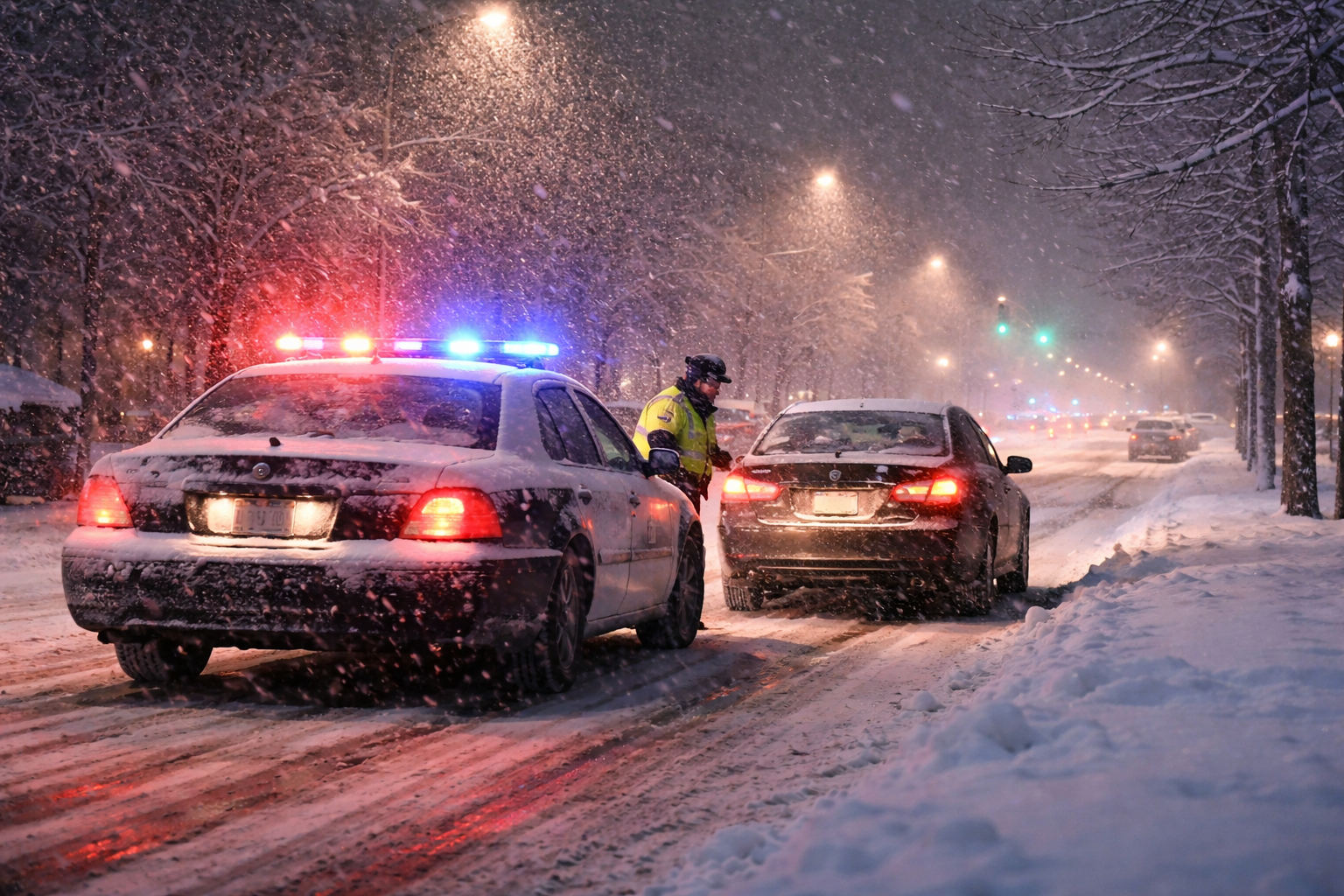
Lake-effect snow is a unique weather phenomenon that occurs when cold air moves over the relatively warmer waters of Lake Erie. This causes the air to pick up moisture, which then falls as snow when the air cools. In Buffalo, lake-effect snow is particularly common in the winter months and can lead to heavy snowfalls in localized areas. These snowstorms can reduce visibility, create slippery roads, and make driving more difficult than usual. For drivers in these conditions, it is not only harder to maintain control of their vehicles, but the risk of accidents and driving infractions increases. This is where the effects of weather on DWI investigations come into play.
Challenges for Law Enforcement in Snowy Conditions:
Police officers in Buffalo are trained to recognize the signs of impaired driving, such as erratic steering, sudden lane changes, and difficulty maintaining a straight line. However, during heavy snow or icy conditions, these same behaviors can easily be misinterpreted. For example, a driver swerving on snow-covered roads might be assumed to be drunk, when in fact, they are simply trying to maintain control of their vehicle on a slippery surface. Officers must make critical decisions under these challenging circumstances, which can sometimes lead to false impressions about a driver’s level of impairment. Additionally, snow can obscure vital clues that would typically indicate intoxication, such as bloodshot eyes or an unsteady walk.
Field sobriety tests, which are typically used by officers to assess a driver’s level of impairment, can also be negatively impacted by weather conditions. The slippery roads and snowbanks that might be present during a DWI stop can make it difficult for even a sober driver to pass these tests. Tests such as walking in a straight line or standing on one leg can be nearly impossible to perform in such conditions, and these tests are often used by police officers to make their judgment calls. When weather makes it difficult to properly assess a driver’s abilities, it can increase the risk of misjudging a situation.
I was advised by a mutual acquaintance to contact Mr. Pressman following my DWI that I received on December 28, 2015. This was the best advice that I could have been given. He was available immediately to speak with. I was put at ease after speaking with him. It was my first DWI and I had no idea what to expect. It was an isolated case of making a very foolish decision to drive. I had so much anxiety and fear of the unknown. Throughout my whole case Mr. Pressman was very reassuring and kept a positive attitude about what my outcome was going to be. He was available several times when I had random questions and never made me feel like an inconvenience. He was right! My case ended up being reduced to a violation from a misdemeanor and now I can finally begin to have my life back to normal. It was a hard lesson to learn but with the right attorney by your side the transition will be easier. Anita D.
The Impact of Snow on Field Sobriety Tests:
Standardized field sobriety tests (SFSTs) are often used by law enforcement to evaluate whether a driver is under the influence of alcohol or drugs. These tests include:
- The walk-and-turn test, where the driver is asked to walk heel-to-toe in a straight line.
- The one-leg stand, where the driver must balance on one leg.
- The horizontal gaze nystagmus (HGN) test, where the officer checks for involuntary eye movements as the driver follows a moving object.
However, snow and icy conditions can affect these tests in several ways. The walk-and-turn test becomes far more difficult when a driver has to navigate slippery or uneven ground. Even a minor slip could be misinterpreted as a lack of coordination due to intoxication. Similarly, the one-leg stand test is extremely challenging in these conditions, as a driver’s ability to balance can be significantly impaired by the icy ground. Additionally, the HGN test can be unreliable in snowy weather, as factors like poor visibility or wind can make it hard for both the officer and the driver to perform the test as intended.
When weather conditions interfere with the accuracy of field sobriety tests, it can affect the officer’s decision to arrest a driver or issue a citation. Drivers who are sober may be wrongfully accused of being intoxicated, while those who are impaired may not be caught due to the distractions created by weather conditions. This is why it is crucial to challenge the reliability of these tests if arrested during inclement weather. At Arthur L. Pressman, Attorney at Law, we understand how to investigate the impact of weather on DWI arrests and use this information to build strong defenses for our clients.
Choosing a DWI Lawyer Cost of a DWI AttorneyRelated Videos
Police Officer Decision-Making in Snowy Conditions:
The process of arresting a driver suspected of DWI involves a series of observations and decisions by law enforcement officers. In the case of a snowstorm or icy conditions, officers must rely heavily on their training, experience, and judgment. However, factors like poor visibility, slippery roads, and the inability to conduct proper field tests can cloud their perception of the situation. For example, a driver who is weaving on the road may appear to be under the influence, but could be struggling with controlling their vehicle in the snow. Similarly, drivers who are slow to respond may be misjudged as overly impaired when they are actually struggling to hear the officer over the wind or the sound of snow scraping against their car.
Furthermore, snowstorms can also delay the time between the stop and the administration of a breathalyzer test, making it more challenging to gather reliable evidence. The longer the wait time between the arrest and the breathalyzer test, the more likely it is that alcohol will metabolize in the driver’s system, potentially leading to an inaccurate reading. In cases where snow or icy conditions delay testing, drivers may face difficulties in defending themselves against a DWI charge, as the evidence may not accurately reflect their level of intoxication at the time of the stop.
Case Results
Legal Defenses for DWI Arrests in Snowy Conditions:
If you’ve been arrested for DWI in Buffalo during snowy conditions, you may have grounds to challenge the arrest. Legal defenses against DWI charges in these conditions may include:
- Challenge the reliability of field sobriety tests: If weather conditions made it difficult for you to perform these tests, it may be possible to argue that they were inaccurate and unreliable.
- Question the officer’s judgment: If the officer’s decision to arrest you was influenced by weather-related factors such as poor visibility or icy roads, your attorney may be able to argue that the arrest was unjustified.
- Challenge the timing of the breathalyzer test: If snow or road conditions caused delays in administering the breathalyzer test, it could be argued that the test results were not accurate.
An experienced DWI lawyer from Arthur L. Pressman, Attorney at Law, can investigate all aspects of your arrest, including weather conditions, to build a defense that protects your rights. It is important to consult with a lawyer who understands how weather and road conditions impact DWI investigations and can use this knowledge to your advantage in court.
Lake-effect snow may be a defining feature of Buffalo’s winters, but it also plays a significant role in how police officers handle DWI investigations. The combination of reduced visibility, slick roads, and unreliable field sobriety tests can lead to inaccurate conclusions about a driver’s level of impairment. If you’ve been charged with a DWI during snowy conditions, it is crucial to seek experienced legal counsel who can analyze all the factors involved in your arrest. At Arthur L. Pressman, Attorney at Law, we are committed to providing a strong defense for those who have been wrongfully accused due to the complexities of weather-related driving conditions.
If you or someone you know has been arrested for DWI during snowy weather in Buffalo, contact Arthur L. Pressman, Attorney at Law, for a free consultation. Let us help you understand your options and protect your rights.