
Spring in Buffalo brings its share of driving challenges. As roads thaw after harsh winter months, drivers often encounter potholes, cracked pavement, and lingering ice. At Arthur L. Pressman, Attorney at Law, we frequently assist clients who have received traffic citations for swerving or sudden maneuvers to avoid these hazards. While law enforcement may initially view these maneuvers as reckless driving or improper lane changes, the law allows consideration of context and necessity. Understanding how road conditions, driver behavior, and documentation intersect with New York Vehicle and Traffic Law is critical to mounting a defense. Drivers who react responsibly to avoid damage or accidents may have valid defenses that could reduce or dismiss a ticket if approached strategically.
Arthur Pressman focuses in the areas of DWI, traffic law and criminal defense.


Understanding Traffic Violations and Driver Responsibilities in Buffalo 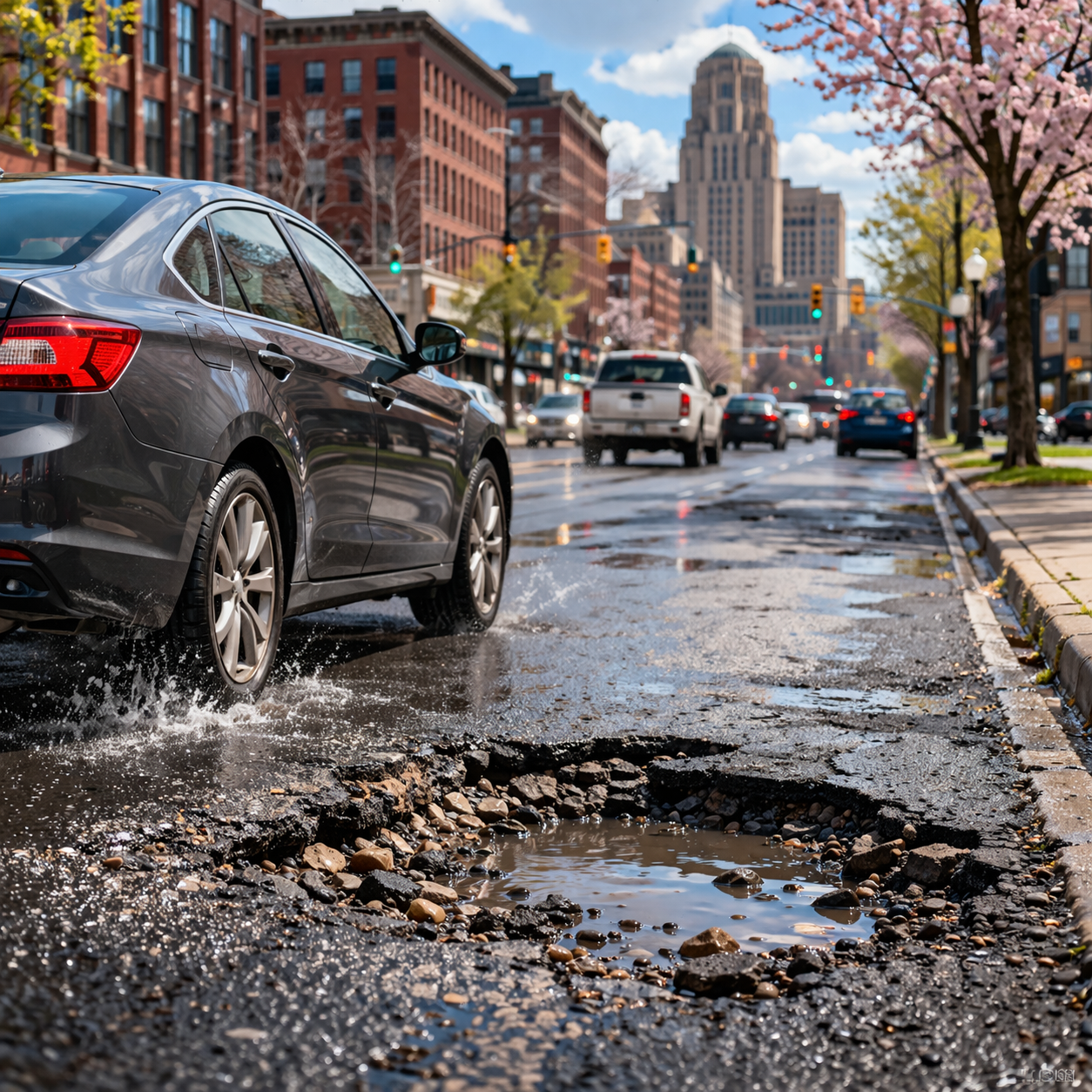
Traffic laws in Buffalo, as in all of New York State, are designed to promote safety and regulate the orderly flow of vehicles. Common citations include speeding, reckless driving, failure to yield, improper lane changes, and failure to obey traffic signals or signage. While these laws seem straightforward, context plays a key role in determining liability. The Vehicle and Traffic Law (VTL) requires that drivers operate vehicles safely and exercise reasonable care under the circumstances. If a driver must swerve to avoid a pothole, debris, or another hazard, the maneuver may be considered necessary and reasonable rather than negligent, provided it is executed safely and without endangering other road users. Courts and traffic officers often consider speed, visibility, traffic flow, and road conditions in evaluating whether a driver’s actions were lawful.
Road Conditions and Their Legal Impact
Buffalo’s harsh winters wreak havoc on city streets. Freeze-thaw cycles leave potholes, uneven asphalt, and cracks that often persist well into spring. Drivers attempting to avoid these hazards may make sudden lane changes or swerve abruptly. Understanding how these conditions affect traffic enforcement is crucial for any defense.
- Potholes: Hitting a pothole is generally not a violation, but swerving to avoid one can be cited as improper lane usage or reckless driving if misinterpreted. Demonstrating that the maneuver prevented vehicle damage or a collision is critical.
- Sudden Swerves: Defensive maneuvers taken to prevent accidents are legally permissible when reasonable. Using dashcam footage, photographs, or eyewitness testimony to document the necessity and safety of a maneuver strengthens a defense.
The law recognizes that road hazards can create scenarios where quick, reasonable reactions are necessary. Presenting this context effectively requires evidence and, often, legal expertise.
Highly recommended Arthur pressman. I don’t live in Buffalo New York but while visiting my family there from Florida. I got pulled over while driving on a, suspended license in Florida. They arrested me and gave me a court date to appear in court and due to me living out of state I just could not afford to go back and forth to buffalo from Florida so that’s when I hired Arthur Pressman. He made sure to handle everything for me and kept me informed with what was going on. I received no points no penalties and the case was dropped. Thank you Arthur pressman your the best. Would definitely recommend you to family and friends. Crystal B.
Legal Considerations and Defenses
Several defenses may apply to traffic citations resulting from reactions to road hazards:
- Necessity Defense: This asserts that the driver’s action was required to avoid a greater harm, such as property damage, personal injury, or a collision. The maneuver is justified as a reasonable response to imminent danger.
- Documentation of Hazard: Photos, videos, or witness statements can prove that a road hazard existed and that the driver’s response was appropriate.
- Officer Misjudgment: Traffic officers may not always account for environmental factors. Evidence demonstrating that the maneuver was cautious and reasonable can challenge a citation.
Presenting these defenses requires detailed preparation, including collecting evidence promptly and understanding local court procedures. Attorneys from Arthur L. Pressman, Attorney at Law have the experience to evaluate cases, advise on evidence collection, and represent clients effectively in Erie County and Buffalo City courts.
Steps to Take After Receiving a Citation
If you receive a citation after swerving or reacting to a road hazard, it is important to take specific actions immediately:
- Avoid Admitting Fault: Statements to law enforcement or insurance representatives that imply negligence can be detrimental.
- Document the Scene: Capture images or video of the road conditions, potholes, or other obstacles that prompted the maneuver.
- Collect Witnesses: Passengers or other drivers who observed the event can provide valuable testimony.
- Consult a Traffic Attorney: Early legal intervention ensures evidence is preserved, procedural deadlines are met, and a strategic defense can be prepared.
Timely action increases the likelihood that a defense based on necessity or road hazards will be successful.
Will an Attorney Save Me Money? Do I Need to Go to Court?Related Videos
Case Examples Demonstrating Valid Defenses
Consider a driver on Main Street swerving to avoid a large pothole. An officer witnessed the maneuver and issued a reckless driving ticket. With proper documentation of road conditions, witness testimony, and legal representation, the necessity defense may argue that the maneuver was both reasonable and required to prevent damage.
In another scenario, drivers may encounter debris left over from winter construction projects. By showing that swerving prevented a collision without endangering other vehicles, the defense can argue that the response was lawful and prudent. These examples demonstrate that context, documentation, and legal guidance are essential to challenging traffic citations successfully.
Spring Driving Safety Recommendations
Even when legal defenses are available, safe driving practices are the best protection against citations. Drivers should:
- Maintain sufficient following distances to allow for sudden stops or evasive maneuvers.
- Reduce speed in areas prone to potholes or construction debris.
- Remain vigilant, particularly during early spring when roads are thawing and ice patches may remain.
- Use dashcams or other recording devices to document hazards and support potential defenses.
Following these precautions not only reduces the likelihood of a citation but also enhances overall roadway safety.
Case Results
The Role of a Buffalo Traffic Attorney
Handling traffic violations resulting from swerves or evasive maneuvers can be complicated. A skilled attorney can:
- Evaluate the circumstances of the citation.
- Advise on proper evidence collection, including photographs, videos, and witness statements.
- Represent drivers in Buffalo and Erie County courts.
- Negotiate reductions in fines, points, or license suspensions.
The attorneys at Arthur L. Pressman, Attorney at Law bring extensive experience defending clients against traffic tickets, DUI charges, and other violations. By combining knowledge of New York traffic law with courtroom expertise, the firm works to protect drivers’ rights and achieve favorable outcomes.
Springtime in Buffalo presents challenging driving conditions. Potholes, construction debris, and thawing roads often require drivers to make sudden, defensive maneuvers. While law enforcement may initially interpret these actions as traffic violations, New York law allows context-based defenses. Proper documentation of road conditions, witness statements, and legal representation are essential for successfully contesting a ticket.
Drivers who act responsibly to avoid hazards may be able to reduce fines, avoid points, or even have a citation dismissed entirely. Seeking legal guidance from Arthur L. Pressman, Attorney at Law ensures that rights are protected, evidence is preserved, and defenses are presented effectively in court. Early intervention, combined with strategic advocacy, can make the difference between an adverse ruling and a favorable outcome.
This information is for general guidance and is not legal advice. Consult an attorney regarding your specific circumstances.