
Drivers in Buffalo heading toward Lake Erie or surrounding recreational areas often encounter increased police presence during summer travel. A routine traffic stop can quickly escalate into a vehicle search depending on officer observations or driver responses. This article explains when police can legally search a vehicle in New York, what constitutional rights protect drivers, and how roadside encounters can lead to criminal or traffic consequences.
Pulled Over on the Way to the Lake? What Buffalo Drivers Should Know About Vehicle Searches 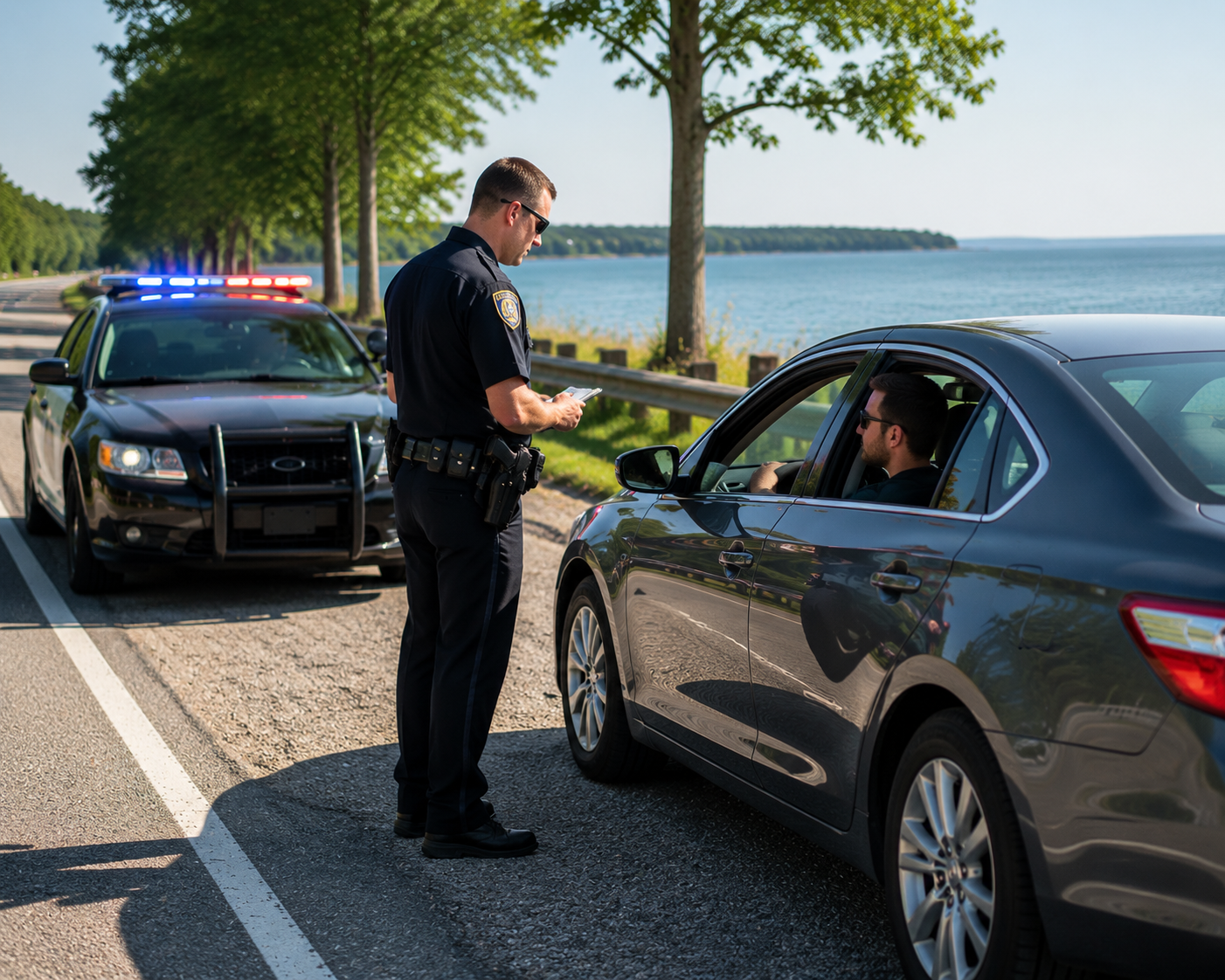
Summer travel in Western New York often means trips to Lake Erie beaches, Niagara County parks, or weekend destinations outside Buffalo. These seasonal drives also come with increased traffic enforcement and roadside stops.
The attorneys at Arthur L. Pressman, Attorney at Law regularly represent drivers who never expected a simple traffic stop to turn into a full vehicle search. Understanding how and when these searches are lawful can significantly affect what happens next in your case.
Traffic stops are not random in their legal consequences. They are governed by constitutional rules, New York statutes, and court interpretations that define exactly what police can and cannot do once they pull a driver over.
Arthur Pressman focuses in the areas of DWI, traffic law and criminal defense.



Why Buffalo sees more vehicle searches during summer travel
During warmer months, law enforcement increases patrols along major routes such as the I-190, Route 5, and roads leading toward Lake Erie beaches. These areas are considered high-traffic recreational corridors.
Common reasons drivers are stopped include:
- Speeding in transition zones leaving Buffalo
- Equipment violations such as lighting or registration issues
- Lane violations or distracted driving
- Suspicion of impaired driving or drug use
While a stop may begin as a minor traffic issue, certain observations can escalate it into a criminal investigation and possible search.
More on traffic stops here:
https://www.arthurpressmanlaw.com/buffalo-dwi-attorney-discusses-what-will-happen-when-you-are-pulled-over-for-dwi/
The legal foundation of vehicle searches in New York
Vehicle searches are primarily governed by the Fourth Amendment of the U.S. Constitution and New York search and seizure law. Police generally need a valid legal basis before searching a vehicle.
The main legal justifications include:
Consent
Probable cause
Search incident to arrest
Inventory search after impoundment
Plain view doctrine
Without one of these, a search may be challenged in court and evidence may be suppressed.
Consent searches: the most misunderstood situation
One of the most common scenarios during Buffalo traffic stops involves consent. Officers may ask, “Do you mind if I search your vehicle?”
Many drivers feel pressured to agree. However, consent must be voluntary. You generally have the right to refuse.
If consent is given, anything found can be used as evidence, even if the search was not otherwise justified.
This is one of the most important decision points during a traffic stop.
Highly recommended Arthur pressman. I don’t live in Buffalo New York but while visiting my family there from Florida. I got pulled over while driving on a, suspended license in Florida. They arrested me and gave me a court date to appear in court and due to me living out of state I just could not afford to go back and forth to buffalo from Florida so that’s when I hired Arthur Pressman. He made sure to handle everything for me and kept me informed with what was going on. I received no points no penalties and the case was dropped. Thank you Arthur pressman your the best. Would definitely recommend you to family and friends. Crystal B.
Probable cause and how searches escalate quickly
Probable cause allows police to search a vehicle without consent. It exists when facts or observations suggest criminal activity is more likely than not.
Examples include:
- Strong odor of alcohol or marijuana
- Visible drugs, paraphernalia, or open containers
- Driver admissions about substances or conduct
- Slurred speech or physical signs of impairment
Once probable cause is established, officers may search the passenger compartment, glove box, and sometimes containers inside the vehicle.
Sobriety investigations often trigger this escalation.
See related guidance here:
https://www.arthurpressmanlaw.com/buffalo-dwi-attorney-discusses-sobriety-tests/
Field sobriety testing and roadside evaluations
Field sobriety tests are commonly used during suspected impaired driving stops. These include balance, coordination, and eye movement tests.
However, these tests are not perfect indicators of impairment. Factors such as:
- Anxiety during the stop
- Uneven pavement or roadside conditions
- Fatigue or medical issues
- Weather or lighting
can all impact performance.
If officers believe the results indicate impairment, they may establish probable cause for arrest and proceed with a search.
For breath test considerations, see:
https://www.arthurpressmanlaw.com/buffalo-dwi-attorney-discusses-if-you-should-take-the-breath-test/
Plain view doctrine during traffic stops
Another major exception is the plain view doctrine. If an officer lawfully stops a vehicle and sees illegal items without searching, that observation can justify further investigation.
This might include:
- Drugs or suspected controlled substances
- Firearms or weapons
- Open alcohol containers
- Stolen property
Once something illegal is visible, police may expand the scope of the stop.
Will an Attorney Save Me Money? Do I Need to Go to Court?Related Videos
Search incident to arrest
If a driver or passenger is arrested during a traffic stop, officers may search areas within immediate reach. This is limited in scope but still significant.
It may include:
- The passenger compartment
- Containers within reach at the time of arrest
This type of search often occurs after a DWI arrest or drug-related arrest.
Inventory searches after towing or impoundment
If a vehicle is impounded, police may conduct an inventory search. This is not based on suspicion but administrative policy. Items found during these searches may still be used as evidence in court.
Canine alerts and extended searches
In some cases, police may call a K-9 unit. A trained dog alert can establish probable cause for a full search of the vehicle. This can significantly expand the scope of the investigation, especially in drug-related stops.
What drivers should do during a traffic stop
While every situation is different, drivers should generally:
- Stay calm and remain in the vehicle unless instructed otherwise
- Keep hands visible at all times
- Provide license, registration, and insurance
- Avoid sudden movements
- Politely decline consent to search if not comfortable
- Ask if they are free to leave when appropriate
You are not required to volunteer unnecessary information during an investigation.
Common mistakes Buffalo drivers make
Many legal issues arise from avoidable mistakes such as:
- Agreeing to searches without understanding rights
- Making inconsistent statements under stress
- Arguing or escalating tension during the stop
- Attempting to conceal items
These actions often give officers additional justification to expand the investigation.
What happens after a vehicle search
If a search leads to evidence, possible outcomes include:
- Traffic tickets
- Criminal charges
- Vehicle impoundment
- Seizure of property
Once a case moves beyond the roadside, legal representation becomes critical.
Drivers may also need help recovering property:
https://www.arthurpressmanlaw.com/buffalo-criminal-defense-attorney-discusses-getting-property-back-from-the-police/
Court consequences after a stop
If citations or charges are issued, drivers may be required to appear in court depending on the severity of the offense.
More information here:
https://www.arthurpressmanlaw.com/buffalo-traffic-ticket-attorney-explains-if-you-need-to-appear-in-court-for-a-ticket/
Why legal representation matters
Vehicle search cases are often decided on small factual details:
- Whether probable cause existed
- Whether consent was voluntary
- What officers observed before the search
- Whether constitutional rules were followed
If evidence is obtained unlawfully, it may be excluded from court under suppression rules.
Arthur L. Pressman, Attorney at Law represents drivers throughout Buffalo and Western New York facing traffic stops, DUI investigations, and vehicle search-related charges. Early legal intervention can make a significant difference in how a case is resolved.
If you were stopped on the way to the lake or anywhere in Buffalo and your vehicle was searched, you should understand your rights under New York law before making decisions about your case. Arthur L. Pressman, Attorney at Law provides experienced defense representation for traffic stops, DUI cases, and criminal charges throughout Western New York.
Disclaimer
This article is for informational purposes only and does not constitute legal advice. You should consult an attorney regarding your specific situation.